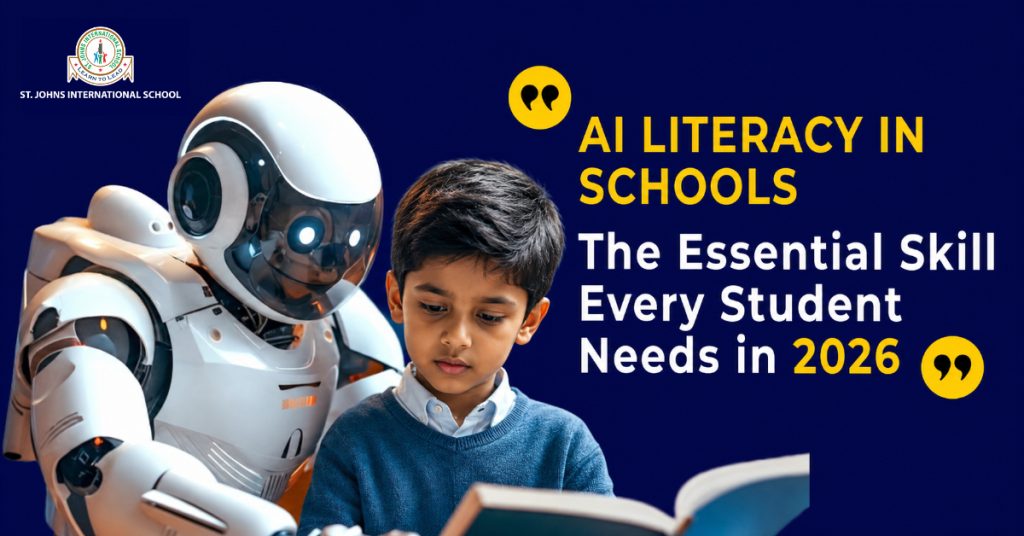
Artificial Intelligence (AI) is rapidly transforming the way we live, work, and learn. From voice assistants and smart devices to personalized recommendations and advanced automation, AI has become a part of everyday life. As technology continues to evolve, schools must prepare students with the knowledge and skills needed to understand and use these innovations responsibly.
In 2026, AI literacy is no longer just an advantage—it is becoming an essential skill for future success. Students who develop a basic understanding of artificial intelligence will be better equipped to navigate a technology-driven world and adapt to emerging career opportunities.
What Is AI Literacy?
AI literacy refers to the ability to understand how artificial intelligence works, where it is used, and how it impacts daily life. It does not mean every student needs to become a programmer or AI engineer. Instead, it focuses on helping students develop awareness, critical thinking, and responsible technology usage.
AI literacy helps students:
- Understand the role of technology in society
- Think critically about information and digital content
- Use AI tools responsibly and ethically
- Develop problem-solving and analytical skills
- Prepare for future academic and career opportunities
As AI becomes increasingly integrated into education and workplaces, these skills are becoming more valuable than ever.
Why AI Literacy Matters for Students
The future workforce will require individuals who can work alongside technology rather than simply use it. Students who understand the basics of artificial intelligence will have a significant advantage in higher education and future careers.
AI literacy encourages:
- Innovation and creativity
- Data-driven thinking
- Digital confidence
- Adaptability to changing technologies
These skills are important regardless of the career path a student chooses, whether in science, business, healthcare, engineering, or creative industries.
AI and Modern Education
Modern schools are increasingly integrating technology into classroom learning. Smart classrooms, digital learning platforms, and interactive educational tools are helping students engage more effectively with concepts and information.
At St. johns International School in HRBR layout, students are encouraged to develop future-ready skills through innovative learning experiences that support curiosity, creativity, and critical thinking.
By introducing students to emerging technologies in age-appropriate ways, schools can help them become informed and responsible digital citizens.
Balancing Technology with Critical Thinking
While AI offers many benefits, students must also learn to evaluate information carefully and think independently. AI literacy is not only about using technology but also about understanding its limitations and ethical considerations.
Students should learn:
- How AI-generated content is created
- The importance of verifying information
- Responsible digital behavior
- Data privacy and online safety
These lessons help students make informed decisions in an increasingly digital world.
Preparing Students for Future Careers
Many of the careers students will pursue in the future will involve technology in some form. Industries across the globe are adopting AI-driven systems, creating demand for individuals who understand digital tools and emerging technologies.
Parents seeking the best international school often look for institutions that provide future-focused education and equip students with skills relevant to tomorrow’s world.
Schools that promote innovation, creativity, and technology awareness help students stay ahead in a rapidly changing environment.
Building Future-Ready Learners
Education today is about preparing students for challenges and opportunities that may not yet exist. AI literacy supports this goal by encouraging curiosity, adaptability, and lifelong learning.
Institutions recognized as a top CBSE School in HRBR Layout understand the importance of integrating modern educational practices with strong academic foundations, helping students develop confidence in both traditional and emerging fields of learning.
Conclusion
AI literacy is quickly becoming one of the most important skills students need in 2026 and beyond. Understanding artificial intelligence, digital tools, and responsible technology use helps students become confident learners and future-ready individuals.
By combining academic excellence with technology awareness and critical thinking, schools can prepare students to thrive in a world where innovation and digital skills continue to shape the future.