Introduction
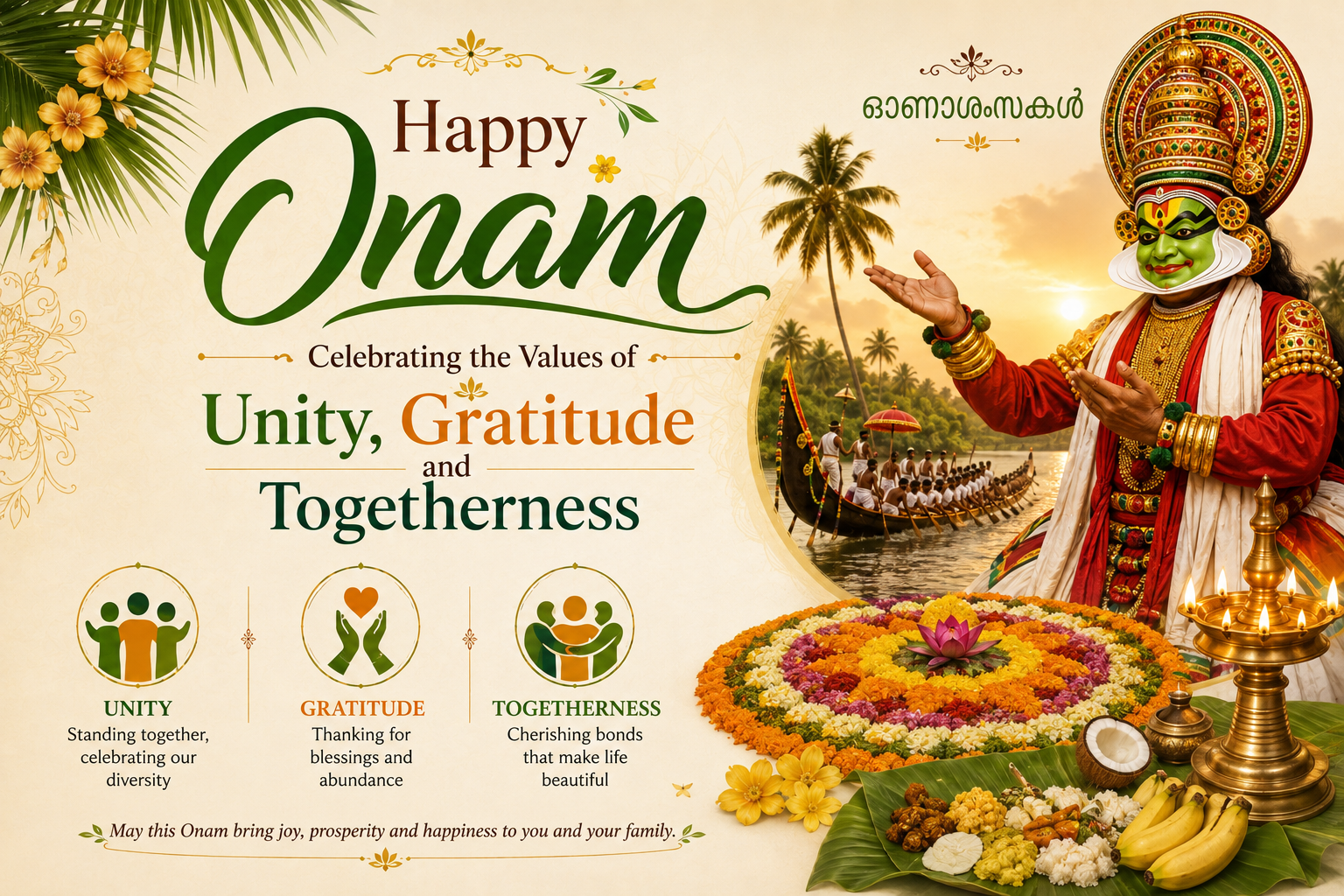
Onam is one of the most vibrant and cherished festivals of Kerala, celebrated with great enthusiasm by people across India and around the world. Known for its colourful traditions, beautiful floral decorations, delicious feast, cultural performances, and joyful gatherings, Onam is much more than a harvest festival. It is a celebration of unity, gratitude, prosperity, kindness, and togetherness.
The festival brings families, friends, and communities together, creating an atmosphere filled with happiness and goodwill. For children, Onam provides an opportunity to learn about Kerala’s rich cultural heritage while understanding values that are important in everyday life. At St. John’s International School, we believe that education extends beyond academics, and cultural celebrations can help students develop respect, empathy, cooperation, and appreciation for diverse traditions.
Understanding the Significance of Onam
Onam is traditionally celebrated to welcome the legendary King Mahabali, whose reign is remembered as a time of prosperity, equality, and happiness. According to popular tradition, King Mahabali returns to visit his people during the festival, and families celebrate his arrival with great joy.
The festival is observed over several days and includes a variety of customs and cultural activities. Homes are decorated with Pookalam, colourful floral designs created at entrances, while traditional foods are prepared and shared with family members and guests.
Onam celebrations remind people to appreciate the blessings they have and to welcome others with warmth and generosity.
The Value of Unity
One of the most beautiful messages of Onam is unity. The festival brings people together regardless of their age, background, or differences.
Communities participate in celebrations, cultural programmes, traditional games, music, dance, and other activities. These shared experiences create a strong sense of belonging and remind us that happiness becomes more meaningful when it is celebrated together.
For students, this teaches an important lesson: working together and respecting one another can create a positive and harmonious environment.
Learning Gratitude
Gratitude is another important value associated with Onam. The festival is closely connected with the harvest season and provides an opportunity to appreciate nature, food, family, and the efforts of people who contribute to our lives.
Children can learn to be thankful for simple things such as the food they eat, the people who care for them, their teachers, friends, and the opportunities they receive.
Practising gratitude can help children develop a positive attitude and encourage them to recognise the efforts and kindness of others.
Celebrating Togetherness
Onam is a festival of togetherness. Families come together to prepare traditional dishes, decorate their homes, exchange greetings, and participate in celebrations.
The traditional Onam Sadya, a grand vegetarian feast served on a banana leaf, is an important part of the celebration. Sharing a meal with family and friends reflects the spirit of hospitality and togetherness that makes Onam special.
For children, such traditions create beautiful memories while teaching them the importance of spending meaningful time with loved ones.
Preserving Cultural Heritage
Festivals play an important role in helping younger generations understand and appreciate cultural traditions. Onam introduces children to Kerala’s customs, art forms, food, music, traditional clothing, and stories.
Schools can make these lessons engaging through activities such as Pookalam-making, traditional dance performances, storytelling, drawing competitions, cultural programmes, and Onam-themed celebrations.
Such activities encourage creativity while helping students develop respect for India’s diverse cultural heritage.
The Spirit of Kindness and Sharing
Onam also encourages people to share happiness with others. Sharing food, helping those in need, welcoming guests, and participating in community activities reflect the festival’s spirit of generosity.
Children can carry this value into their daily lives by sharing with classmates, helping friends, appreciating others, and being considerate towards people around them.
Small acts of kindness can make a significant difference and help create a more caring school community.
Onam Lessons for Young Learners
The values associated with Onam are meaningful beyond the festival itself. Unity teaches children the importance of cooperation. Gratitude encourages them to appreciate what they have. Togetherness reminds them to value family, friendship, and community.
When these values become part of everyday behaviour, children grow into responsible, respectful, and compassionate individuals who can contribute positively to society.
Conclusion
Onam is a beautiful celebration of culture, prosperity, unity, gratitude, and togetherness. From colourful Pookalams and traditional celebrations to the warmth of family gatherings and the joy of sharing a Sadya, every aspect of the festival carries a meaningful message.
For children, Onam offers valuable lessons about appreciating traditions, respecting others, working together, sharing happiness, and being grateful for life’s blessings. These values can help them build stronger relationships and become thoughtful members of their communities.
At St. John’s International School, we celebrate the diversity of India’s cultural heritage and encourage students to learn from the values represented by different festivals. May this Onam bring happiness, prosperity, peace, and togetherness to every family.
Wishing everyone a very Happy Onam! May the spirit of unity, gratitude, kindness, and togetherness fill every heart and home with joy.